Tools & Workflows | 9 min read
Published | Updated
AI Follow-Up Systems: How to Stop Losing Leads After the First Call, Form, or Quote Request
Most businesses don’t lose leads because the customer was impossible to reach. They lose leads because the follow-up was late, unclear, or forgotten.
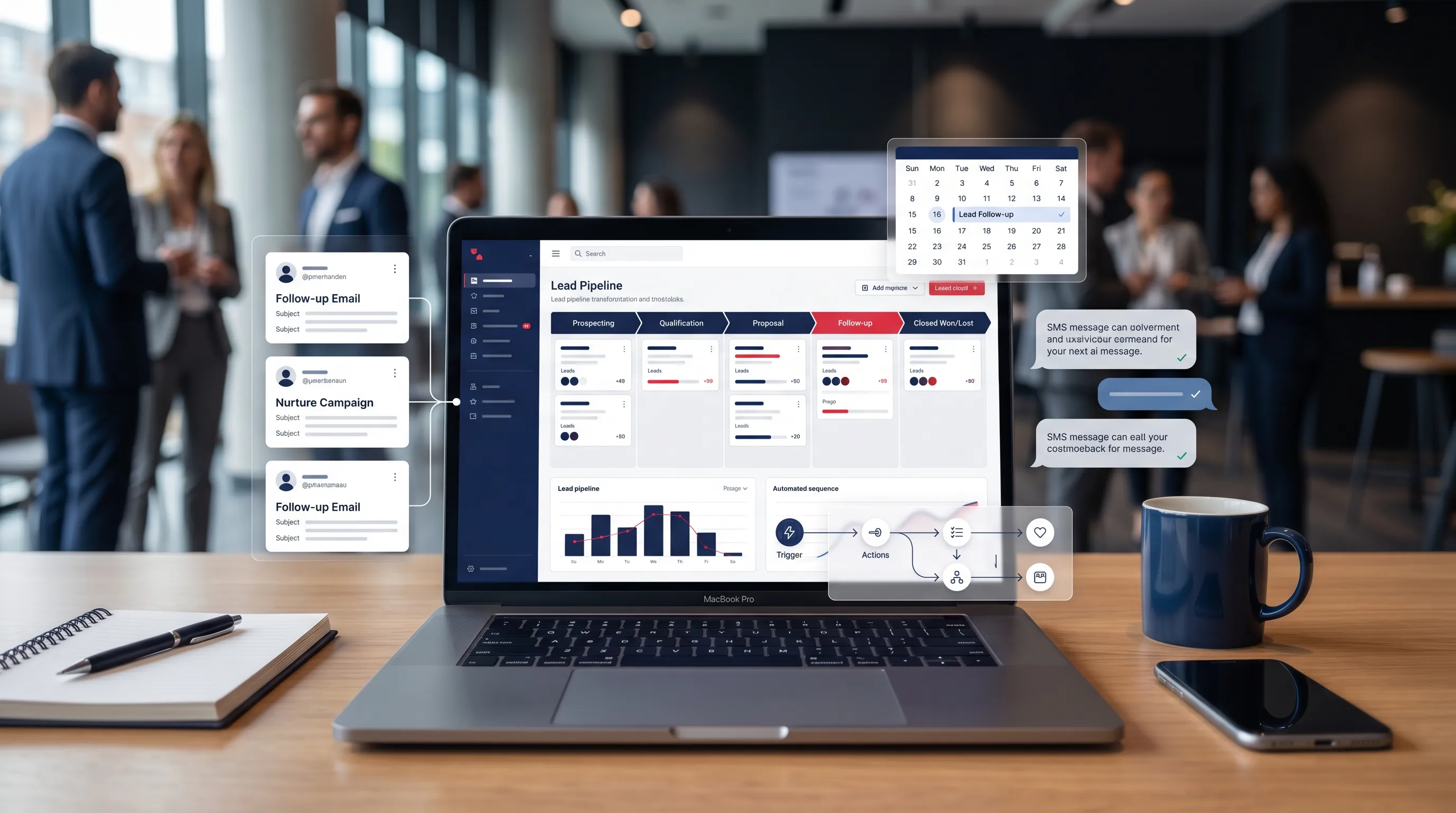
An AI follow-up system helps a business respond to leads faster, organize customer details, draft next-step messages, create reminders, and keep opportunities from going cold. It’s not about spamming prospects. It’s about making sure real interested people receive clear, timely communication before they choose someone else.
Why follow-up leaks so much money
A customer calls, fills out a form, sends a message, asks for a quote, or requests information. The business intends to follow up. Then the day gets busy. A job runs long. A staff member gets pulled into something else. The estimate isn’t ready. The customer calls another company.
That leak is common because follow-up is simple but not easy. It has to happen consistently, quickly, and with the right message. AI helps by turning follow-up into a repeatable workflow instead of a memory test.
What can AI do in a follow-up system?
- Draft an immediate response to a new lead.
- Summarize the customer request for the team.
- Suggest intake questions before an estimate or appointment.
- Create a next-day follow-up if the customer doesn’t respond.
- Draft a quote follow-up that answers common objections.
- Create appointment reminders and preparation instructions.
- Draft review requests after the job is complete.
- Create reactivation messages for old leads or past customers.
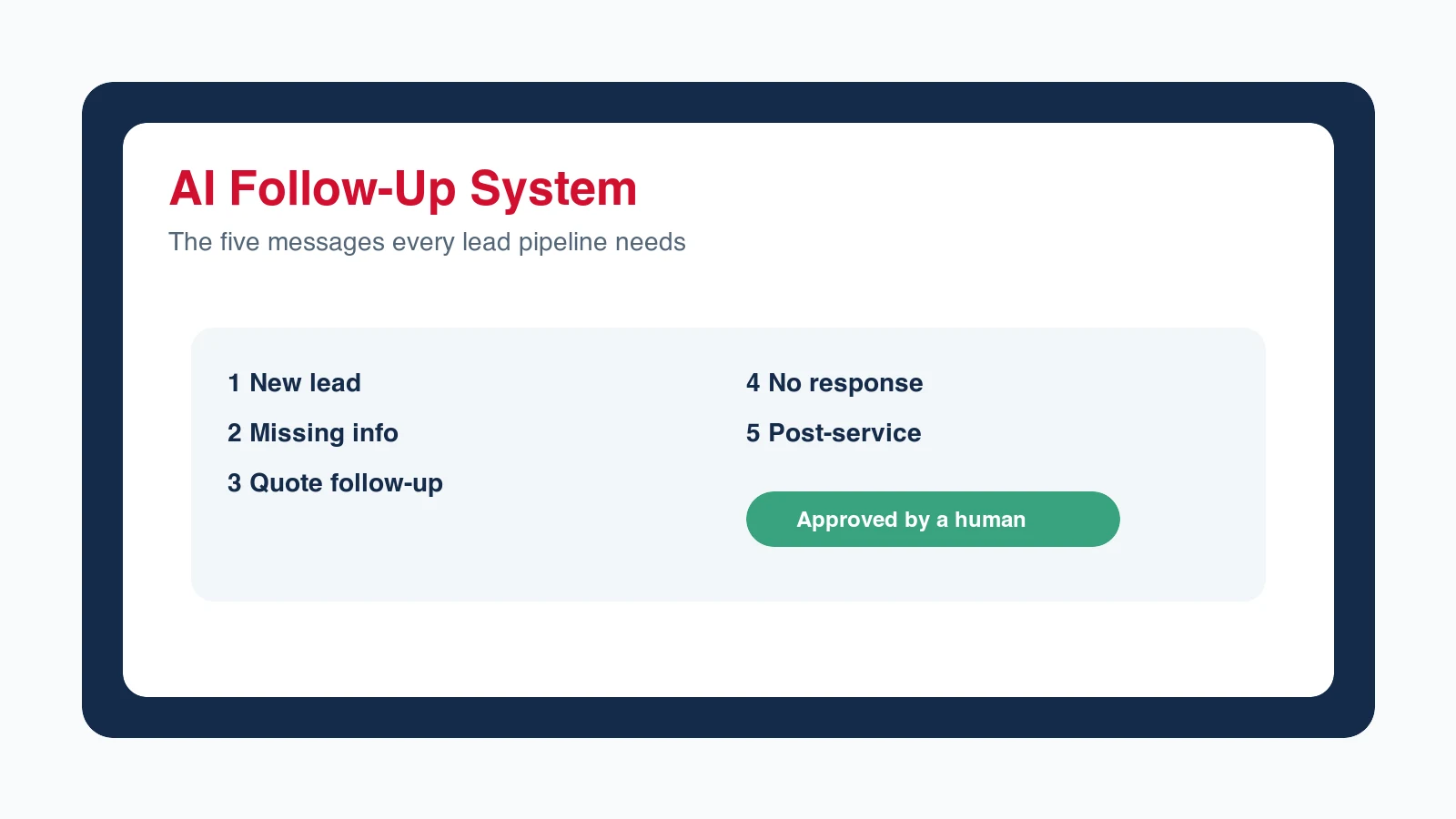
The five messages every business should have ready
- New lead response: confirms the request and explains what happens next.
- Missing information request: asks the right questions without sounding robotic.
- Quote follow-up: reminds the customer of the value and invites a decision.
- No-response follow-up: keeps the door open without pressure.
- Post-service follow-up: asks for feedback, reviews, referrals, or the next appointment.
AI can draft all five messages for each important service. The owner or manager should review them once, improve the tone, and save the approved versions for repeat use.
How fast should a business respond to a lead?
A business should respond as fast as it reasonably can, especially when the customer has high intent. The exact timing depends on the industry, but the principle is simple: the longer the delay, the more time the customer has to compare, forget, or choose someone else.
AI follow-up for quote requests
Quote requests are dangerous because the customer is usually comparing options. AI can help draft a follow-up that reminds the customer what was included, answers likely questions, explains the next step, and gives them a reason to reply.
The message shouldn’t be pushy. It should be useful. A good follow-up sounds like, "Here’s what we discussed, here’s what happens next, and here’s the simplest way to move forward."
AI follow-up for old leads
Old leads are often a hidden asset. Some customers didn’t say no. They got busy, confused, distracted, or chose to wait. AI can help group old leads by service, timing, reason for inquiry, or last contact, then draft a reactivation message that feels relevant.
Before launching that reactivation, use the AI CRM cleanup workflow for small business to verify duplicate records, ownership, status, last activity, and the evidence behind each next step.
- Seasonal reminder for past estimates.
- Helpful checklist related to the original request.
- Limited-time appointment availability.
- New service update or improved offer.
- Referral request for satisfied past customers.
What should you never automate in follow-up?
Don’t automate trust away. Sensitive complaints, complicated service problems, refunds, medical or legal issues, and emotional customer situations need human judgment. AI can summarize and draft, but the business should decide what gets sent.
A simple AI follow-up workflow
- Write down the lead source: call, form, ad, referral, Google, event, or old customer.
- Capture what the customer asked for.
- Use AI to draft the first reply and three follow-up messages.
- Review the messages for accuracy and tone.
- Save approved versions by service type.
- Track which messages lead to replies, appointments, quotes, and sales.
How many follow-up messages is too many?
The real answer is that most businesses stop far too early rather than going too far. One message and silence is the norm, and it is why so much money sits in old lead lists. The limit is not a number of messages, it is whether each one carries something worth reading.
A sequence of five messages that each answer a different question, a price concern, a timing concern, a proof point, a common objection, an easy way to restart, reads as helpful. Five messages that all say checking in again reads as pestering. AI makes the first version cheap to produce, which removes the excuse that writing five good messages takes too long.
The signal to stop is behavioural, not numerical. Someone who opens every message and never replies is still considering it. Someone who has not opened anything in a month has moved on, and continuing costs you the option of contacting them again in six months when their situation changes. Leaving on good terms is part of the follow-up system.
The last message in any sequence should make that easy: say plainly that you will stop, leave the door open, and mean it. It is the message that most often gets a reply, because it is the only one that is not asking for anything.
What else do people ask about AI follow-up?
Is AI follow-up the same as spam?
No. Good AI follow-up helps a business send clear, relevant, timely messages to people who already asked for help. Spam ignores context. Useful follow-up respects the customer and makes the next step easier.
Who should approve AI follow-up messages?
The owner, manager, or responsible team member should approve the message strategy, tone, promises, and timing. AI can draft and organize. A human should protect accuracy and trust.
Can Winning With AI help me build this?
Winning With AI shows how to turn everyday lead, quote, review, and customer situations into repeatable AI-assisted workflows that a nontechnical business owner or team member can understand.
How quickly should the first follow-up message go out?
The same working hour if you can, and the same day at the outside. Speed matters more than polish at that point, because the person enquiring is usually contacting several businesses and the reply order shapes the shortlist. A drafted response waiting for a thirty-second check is what makes that pace possible.
What do I put in a follow-up when there is nothing new to say?
Something useful rather than a check-in. A relevant example, an answer to the question they would ask next, or a straight offer to close the loop if the timing is wrong. Messages that exist only to ask whether they have decided are the ones that teach people to stop replying.
How do I keep follow-up from feeling like pressure?
Say how many more times you plan to be in touch and then stick to it. A sequence with a stated end reads as organised; the same messages with no end read as pursuit. Giving people an easy way to say not now also keeps the list clean and the tone civil.
See AI follow-up built in plain English
At Winning With AI, you can watch follow-up workflows built live: customer replies, lead nurture, old-lead reactivation, review requests, and next-step messages. You’ll see how AI can help without removing the human judgment that makes a business trustworthy.
A reliable follow-up process also needs AI productivity workflows for emails, notes, and reports and documented AI-assisted standard operating procedures. To see the workflow approach in person, find a Winning With AI seminar.